
 Back


Wine Serving Temperature Chart (°F)
Serving wine at the right temperature can make a noticeable difference in the glass. Temperature influences how easily aromas emerge, how fresh a wine feels, how clearly you perceive acidity and tannins, and how prominent alcohol seems.
The simplest rule is that sparkling and sweet wines are served coldest, white and rosé wines are chilled, and red wines are served cool rather than warm. Even red wine usually benefits from being below the temperature of a typical American home.
The detailed ranges below follow L’Atelier du Vin’s existing wine-service recommendations, converted into Fahrenheit for the U.S. market. They also align with the broader service principle that lighter whites should be chilled, fuller whites lightly chilled, and red wines served cooler than many people understand by modern “room temperature.”
Wine Serving Temperature Chart in Fahrenheit
Use this wine serving temperature chart in Fahrenheit as a practical reference rather than an absolute rule. Wine changes as it warms in the glass, so a difference of a few degrees is not necessarily a problem.
| Wine Style | Serving Temperature | Examples |
|---|---|---|
| Sweet white wine | 43–46°F | Sauternes, sweet Riesling, late-harvest whites |
| Light, fruity, acidic dry white | 46–50°F | Sauvignon Blanc, Pinot Grigio, Albariño |
| Fruity, acidic rosé | 46–50°F | Dry Provence-style rosé, light rosé |
| Champagne and sparkling wine | 46–50°F | Champagne, Crémant, Prosecco, Cava |
| Full-bodied rosé | 50–54°F | Richer, structured rosé |
| Complex and rich white | 52–55°F | Oaked Chardonnay, richer white Burgundy |
| Fruity and light red | 52–54°F | Gamay, lighter Pinot Noir |
| Medium-bodied or higher-alcohol red | 57–61°F | Merlot, Grenache, many Syrah styles |
| Tannic red wine | 61–63°F | Cabernet Sauvignon, structured Bordeaux blends |
| Mature fine red wine | 63–64°F | Mature, complex cellar-aged reds |
These ranges are based on L’Atelier du Vin’s wine-service guide, which differentiates temperature according to body, structure, and wine style rather than simply dividing wine into “red” and “white.”
That distinction matters. A delicate Gamay and a powerful Cabernet Sauvignon are both red wines, but they do not necessarily show their best at the same temperature. The same is true of a crisp Sauvignon Blanc and a rich, oak-aged Chardonnay.
Why Does Wine Serving Temperature Matter?
Temperature changes what you perceive when you smell and taste wine. When wine is very cold, aromatic expression becomes more restrained. This can be useful for preserving freshness, but excessive chilling can make a wine seem muted.
WSET notes that over-chilling white, rosé, and sparkling wine below about 43°F can mask flavors. At the other end of the spectrum, full-bodied reds served above about 64°F can lose freshness and develop a less clearly defined flavor structure.
As wine becomes warmer, aromas become easier to perceive. That is one reason a complex white wine can benefit from being served slightly warmer than a light, crisp white. Warmth also affects the balance of a red wine: if a structured red is served too warm, alcohol can become more noticeable and the wine may feel less fresh.
The objective is therefore not simply to make white wine cold and red wine warm. It is to find a temperature at which the wine’s aroma, freshness, texture, and structure remain in balance.
Temperature is also only one part of thoughtful wine service. Glass shape, aeration, and the way the bottle is handled can all affect the tasting experience.
What Temperature Should Red Wine Be Served At?
One of the most persistent wine-service habits is to serve all red wine at “room temperature.” The problem is that modern room temperature may be much warmer than the traditional conditions associated with that expression.
WSET places the traditional service range commonly described as room temperature for wine at approximately 59–64°F, rather than the 68°F or higher found in many heated homes. Red wine should therefore usually feel cool, not warm, when first poured.
Light and Fruity Red Wines
Fruity, lighter reds can be particularly enjoyable with a slight chill. L’Atelier du Vin recommends approximately 52–54°F for light, fruity red wines.
- Gamay and Beaujolais-style wines
- light Pinot Noir
- youthful, fruit-driven reds
- low-tannin reds designed for freshness
WSET likewise notes that light- to medium-bodied, lower-tannin reds such as Beaujolais and Pinot Noir can be good candidates for serving slightly chilled.
If a light red is sitting in a 70°F kitchen or dining room, a short period in the refrigerator can help bring it closer to its ideal range.
Medium-Bodied and Higher-Alcohol Reds
Red wines with greater body or alcohol generally benefit from a little more warmth because their aromas and structure need room to unfold. A useful range is approximately 57–61°F.
Rather than focusing only on grape variety, consider the actual style of the bottle. A powerful, ripe expression of a grape may be better closer to the warmer end, while a fresher version may show well several degrees cooler.
The goal is not to make the bottle warm. It is to avoid serving it either refrigerator-cold or at the temperature of an overheated room.
Tannic and Mature Red Wines
Structured, tannic reds can be served at approximately 61–63°F, while mature fine reds may reach roughly 63–64°F.
This range gives complex aromas the opportunity to emerge without letting heat dominate the wine. Mature wine also raises another consideration: sediment. An older bottle may benefit from standing upright before service and, where appropriate, being carefully decanted.
Remember that wine continues to warm after it enters the glass. Serving a red at the lower end of its preferred range can allow its aromatic profile to evolve naturally over the course of the meal.
What Temperature Should White Wine Be Served At?
White wine should generally be served chilled, but chilled does not always mean straight-from-the-refrigerator cold. A light Sauvignon Blanc and a rich Chardonnay have different aromatic and textural profiles, so treating them identically can hide some of what makes each wine distinctive.
Light, Crisp and Aromatic Whites
Light, fruity, high-acid dry whites are well suited to approximately 46–50°F.
- Sauvignon Blanc
- Pinot Grigio
- Albariño
- many youthful Rieslings
- other fresh, aromatic dry whites
Cool temperatures emphasize the refreshing character of these wines. At the same time, avoiding extreme cold helps preserve their aromatic personality. If a bottle has been kept in a very cold refrigerator, it can become more expressive as it warms slightly in the glass.
Rich and Complex White Wines
A fuller-bodied or more complex white wine usually deserves a slightly warmer serving temperature. For rich white wines, L’Atelier du Vin recommends approximately 52–55°F. WSET similarly places full-bodied whites such as oaked Chardonnay around 50–55°F.
- oak-aged Chardonnay
- richer white Burgundy
- structured Rhône-style whites
- complex mature whites
Serving these wines too cold can mute the texture and aromatic detail that distinguish them from lighter whites.
What Temperature Should Rosé Wine Be Served At?
Rosé does not need one universal serving temperature. Fresh, fruity, acidic rosés can be served at approximately 46–50°F, while fuller, rounder rosés can move toward 50–54°F.
The same principle used for white wine applies here: the lighter the style, the cooler it can generally be served; the more structured and complex the wine, the more room it needs to express itself.
A very pale, crisp summer rosé may taste lively at the lower end of the range. A gastronomic rosé with greater body and texture may reveal more character after warming a few degrees.
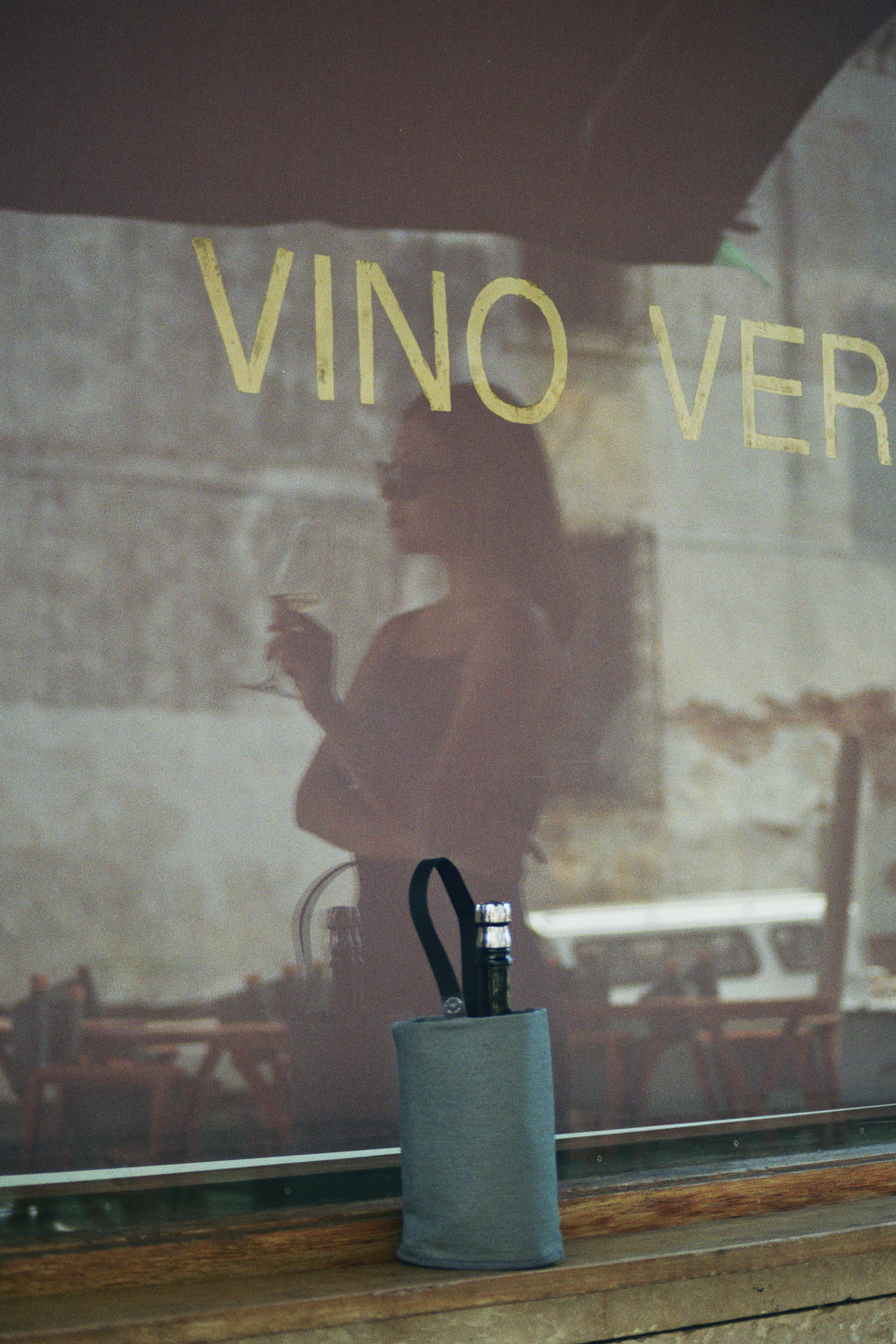
When serving rosé outdoors, remember that the surrounding temperature can warm the bottle quickly. A reusable cooler can help maintain a stable temperature between pours. L’Atelier du Vin’s Fresh Baladeur lists a target range of 48–51°F for white and rosé wines.
Explore wine service accessories
What Temperature Should Champagne and Sparkling Wine Be Served At?
Champagne and sparkling wine should be served well chilled. L’Atelier du Vin recommends approximately 46–50°F for Champagne and sparkling wines.
Cooling sparkling wine contributes to the sensation of freshness that defines the style. However, excessive cold can also reduce aromatic expression, particularly in more complex wines.
For an everyday sparkling wine built around freshness and fruit, staying near the cooler end is usually a practical approach. A more complex Champagne may become increasingly expressive as it warms slightly in the glass.
At the table, an ice-and-water bucket is more effective than using ice alone. WSET recommends surrounding the bottle with a mixture of ice and water because water transfers heat from the bottle more effectively than air trapped between ice cubes.
What Temperature Should Sweet Wine Be Served At?
Sweet white wines are generally served among the coldest wines at the table. L’Atelier du Vin recommends approximately 43–46°F for sweet white wines.
Chilling helps preserve freshness alongside sweetness. As with other wines, however, serving a sweet wine excessively cold can reduce aromatic expression.
Examples may include dessert wines, late-harvest whites, and other sweet styles. A small pour will also warm more quickly in the glass, so beginning toward the lower end of the range can be practical.
Fortified wines require more individual treatment because their ideal temperature varies widely by style. A dry Fino Sherry, for example, is not served in the same way as a richer Port. When the producer provides a specific serving recommendation, that advice should take priority over a broad category rule.
How to Chill Wine to the Right Temperature
You do not need complicated equipment to adjust wine temperature at home. If a bottle is too warm, use one of these methods:
- Refrigerator — the simplest method when you have time before service.
- Ice-and-water bucket — faster and more even than surrounding the bottle with ice alone.
- Wine cooler or cooling sleeve — useful for maintaining temperature at the table or outdoors.
- Wine thermometer — the most reliable way to know when the bottle has entered the desired range.
Avoid trying to heat or cool fine wine through extreme temperature changes. WSET specifically advises against quickly warming wine near a strong heat source.
For red wine, a short period of gentle cooling is often all that is needed. The objective may simply be to bring a bottle from a warm room into the upper 50s or low 60s. For white, rosé, and sparkling wine, cool the bottle before the meal and then maintain the temperature during service.
Explore serveware and wine accessories
How to Measure and Maintain Wine Temperature
A wine thermometer removes much of the guesswork. Measure the bottle before service, then remember that the wine will begin changing temperature as soon as it is poured. The serving temperature is therefore a starting point rather than a fixed state.
For white, rosé, and sparkling wine, keep the bottle in a cooler between pours if the room is warm. For red wine, avoid leaving the bottle close to a fireplace, stove, sunny window, or other heat source.
Glassware matters as well. A stemmed wine glass allows the drinker to hold the stem rather than warming the bowl continuously with the hand. More importantly, appropriate glass volume gives the wine space to develop aromatically as its temperature changes.
The Exploreur 655 – Aroma Line invites you to follow this evolution in the glass. Its generous bowl gives the wine room to breathe, while the patented Aroma Line encourages contact between wine and air as you swirl.
Discover Exploreur 655 – Aroma Line
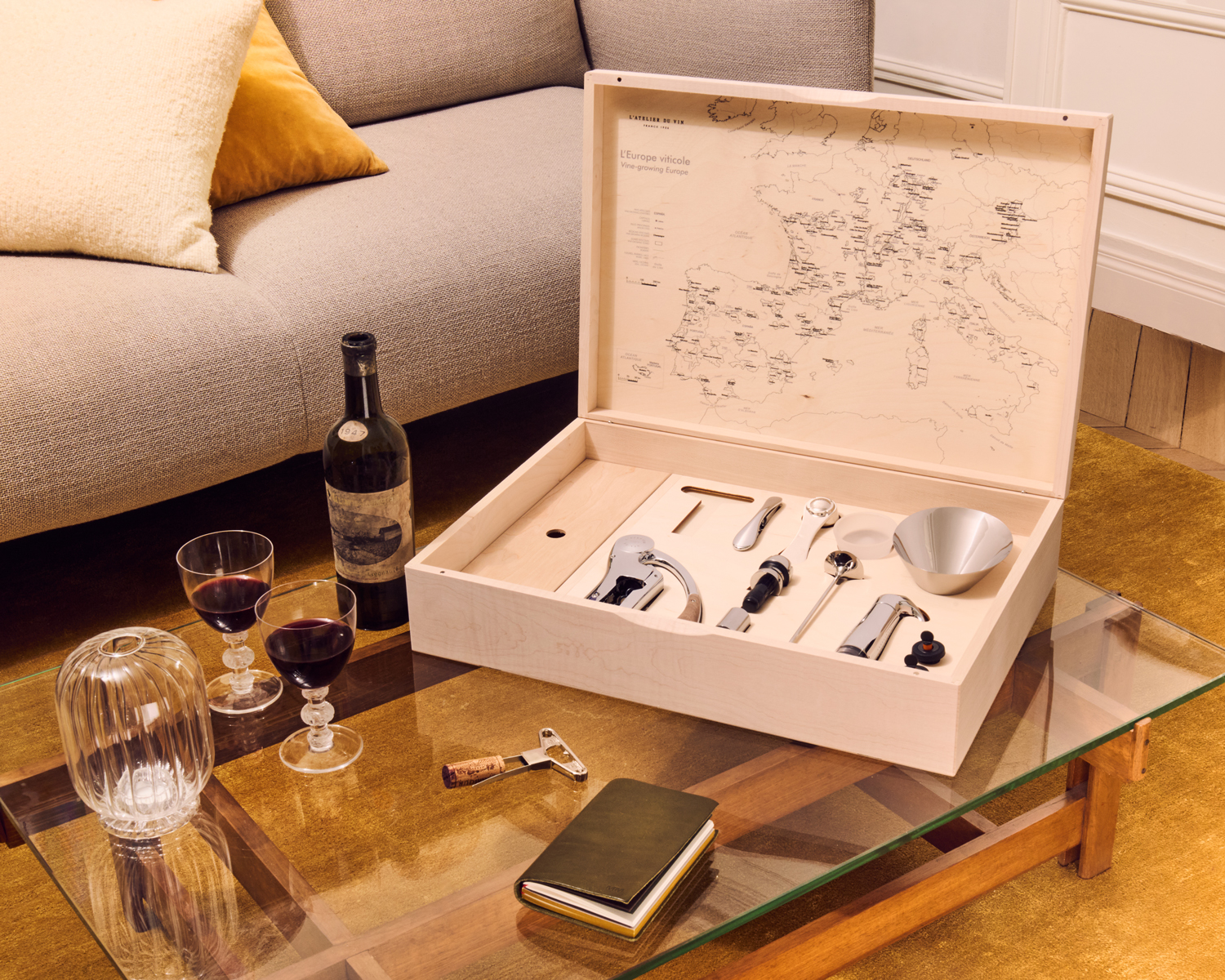
For a more complete wine-service setup, the Oeno Box Connoisseur 1 includes service tools designed for the ritual from opening to serving.
Discover Oeno Box Connoisseur 1
Wine Serving Temperature vs. Storage Temperature
Serving temperature and storage temperature are not the same thing. A bottle may be stored at one stable temperature and then deliberately cooled or allowed to warm before it is served.
WSET recommends approximately 50–59°F for long-term wine storage and emphasizes the importance of keeping conditions cool and stable.
By contrast, serving temperature changes according to wine style. A sparkling wine may be poured around 46–50°F, while a mature red may be closer to 63–64°F.
Do not therefore set a wine cellar to the exact temperature at which you want to drink every bottle. Storage is about protecting wine over time; serving temperature is about preparing a particular bottle for the glass.
A Considered Space for Your Wine Collection
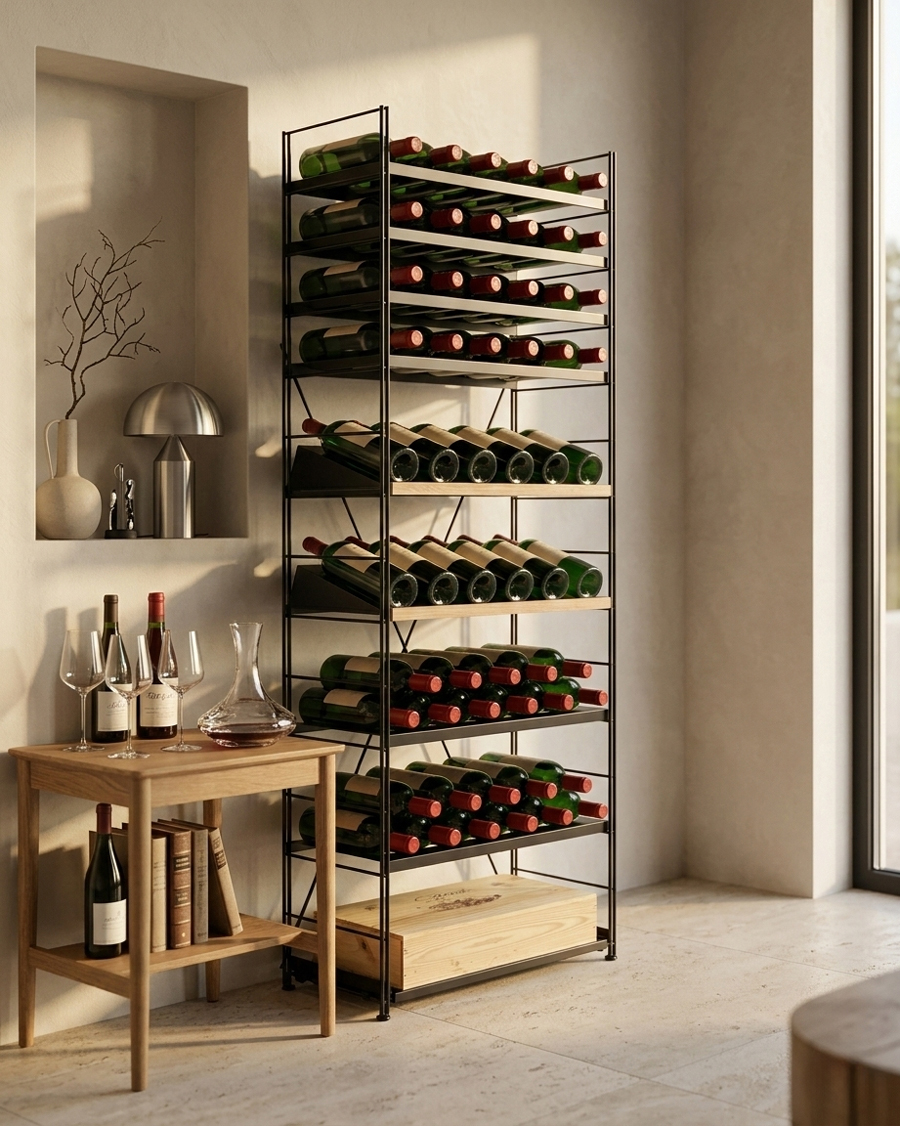
Thoughtful storage begins with a cool, stable environment, away from direct sunlight and sources of heat. Within that space, the Skin Modular Wine Rack System brings structure to a growing collection. Its configurable shelves, drawers, and accessories help organize and present your bottles, with a layout that can evolve as your collection changes. Choose the location with care: the rack organizes your wines, while the surrounding conditions determine their storage temperature.
Common Wine Serving Temperature Mistakes
- Serving red wine too warm. “Room temperature” should not automatically mean the temperature of your living room. Many reds are more balanced when served between the low 50s and low 60s, depending on style.
- Serving every white wine refrigerator-cold. Crisp Sauvignon Blanc and rich Chardonnay should not necessarily be treated the same way. The richer white generally benefits from a few additional degrees.
- Assuming the wine must remain at one exact number. The useful target is a range. Wine naturally warms after pouring, and that evolution can be part of the tasting experience.
- Forgetting the environment. A bottle that is correct when it reaches the table may quickly become too warm during an outdoor summer lunch.
- Treating temperature in isolation. Proper glassware, thoughtful pouring, and, when appropriate, aeration or decanting all contribute to serving the wine well.
The aim is not to turn wine service into a technical exercise. It is simply to give the wine favorable conditions in which to express its aromas, texture, freshness, and balance.
Frequently Asked Questions
What is the ideal serving temperature for red wine in Fahrenheit?
It depends on the style. Light, fruity reds can be served around 52–54°F, medium-bodied or higher-alcohol reds around 57–61°F, tannic reds around 61–63°F, and mature complex reds around 63–64°F.
What temperature should white wine be served at?
Light, crisp, aromatic whites generally work well around 46–50°F, while richer and more complex whites can be served around 52–55°F.
What temperature should Champagne be served at?
L’Atelier du Vin recommends approximately 46–50°F for Champagne and sparkling wines. This keeps the wine fresh while allowing its aromas to emerge as it warms slightly in the glass.
Should red wine be served at room temperature?
Not necessarily at modern room temperature. WSET notes that the traditional wine-service meaning of room temperature is approximately 59–64°F, which is cooler than many homes today. Light reds may be served cooler still.
Can wine be served too cold?
Yes. Very low temperatures can suppress aroma and flavor. WSET notes that chilling white, rosé, and sparkling wines below approximately 43°F can mask their flavors.
How can I quickly cool a bottle of wine?
Place the bottle in an ice bucket containing both ice and water. The water enables more effective heat transfer than ice alone. Check the bottle periodically and use a wine thermometer when precision matters.
Is wine storage temperature the same as serving temperature?
No. WSET gives approximately 50–59°F as a suitable cool range for wine storage, whereas serving temperatures vary widely depending on the style of wine.
Does wine warm up after it is poured?
Yes. Once wine enters the glass, it begins moving toward the surrounding room temperature. That is why serving temperature should be treated as a starting range rather than an exact temperature that must remain constant throughout the meal.
Serve the Wine, Not the Rule
A wine serving temperature chart in Fahrenheit is useful because different wine styles reveal themselves best at different temperatures. Sparkling, sweet, light white, and fresh rosé wines belong at the cooler end; rich whites and light reds sit in the middle; structured and mature reds are served warmer, but still generally cooler than a typical modern room.
Rather than chasing one exact number, use the recommended range as your starting point and observe how the wine develops in the glass. The right temperature should support the wine’s freshness, aroma, balance, and texture—not distract from them.

Paris Design Week 2026: A Wine Lover’s Guide
Add French wine design to your Paris itinerary. Meet our designers and explore tasting glassware and cellar ideas at 80 rue Bonaparte, September 10–19, 2026.
Discover our the brand
Exclusive Paul Smith Series by L’Atelier du Vin: A Limited-Edition Wine Accessory Range
Celebrating a unique partnership, L'Atelier du Vin introduces an exclusive wine accessory line as part of the Paul Smith Series. This limited-edition range showcases two superior wine tools, distinguished by the iconic style of the renowned British fashion designer, Paul Smith.
Discover our collaborations
L’Atelier du Vin in America
In 2022, we expanded our horizons by setting up shop in the U.S., bringing the Oeno Motion Transatlantic® corkscrew - a symbol of the deep-rooted friendship between France and America - exclusively to our American customers.
Discover our the brand


